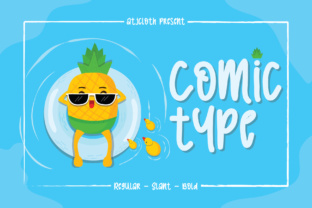
Comic Type: Hand-Drawn Font with Three Warm Styles
Typography is often the first thing people notice, even if they do not realize it. The letters on a product package, a website banner, or a children's book cover set a mood before a single word is read. Comic Type is a font designed specifically for projects that need a friendly, approachable, and handcrafted look. Unlike many digital fonts that feel cold or mechanically perfect, this typeface brings a human touch to every character. It comes in three distinct styles, each drawn by hand to preserve the slight imperfections that make lettering feel warm and authentic. Whether you are designing a logo for a baby boutique, crafting a children's book, or creating playful social media graphics, Comic Type offers a versatile foundation that feels both personal and professional.
What Makes Comic Type Different
Most fonts are built from precise vector paths, mathematically smooth and perfectly symmetrical. That precision is useful for corporate reports and formal documents, but it can feel stiff for creative work. Comic Type takes a different approach. Every letter, number, and punctuation mark has been drawn manually, so each curve carries subtle variations in weight, angle, and spacing. These small irregularities are not flaws—they are the source of the font's warmth. When people see text set in Comic Type, they respond to the human effort behind the shapes. The result is a typeface that feels like it was written by hand, but with the consistency and readability of a professional font.
The three available styles give you flexibility without overwhelming you with choices. You can use one style alone for a clean look or mix them to create contrast and emphasis. This variety makes Comic Type suitable for a wide range of projects, from headlines to body text, from badges to full paragraphs. The hand-drawn quality remains consistent across all three styles, so your design maintains a cohesive voice even when you switch between them.
Who Benefits from a Hand-Drawn Typeface
Fonts are tools, and like any tool, they work best when matched to the right task. Comic Type is especially valuable for anyone who communicates with an audience that values warmth, playfulness, or authenticity. Small business owners, for example, often struggle to make their brand stand out in a crowded market. A hand-drawn font can differentiate a baby store, a children's clothing line, or a creative studio from competitors that rely on generic typography. When customers see a logo or product label set in Comic Type, they perceive care and originality.
Freelancers and independent creators also benefit from using a typeface that feels personal. If you design invitations, create content for social media, or produce printables for parents and educators, the font you choose becomes part of your signature style. Comic Type helps you build a consistent visual identity without needing advanced illustration skills. The hand-drawn characters do the work of conveying approachability for you.
Educators and hobbyists who make materials for young children will appreciate how the font balances fun with readability. Children respond to letters that look friendly and organic, yet the characters remain clear enough for early readers to recognize. The same quality makes Comic Type a strong choice for classroom decor, flashcards, and activity sheets.
Practical Uses for Comic Type
The versatility of this font becomes clear when you look at real applications. A baby store logo is one of the most common uses, and for good reason. Parents shopping for their children are drawn to brands that feel gentle and trustworthy. Comic Type's soft hand-drawn shapes communicate exactly that. On a storefront sign, a website header, or a product tag, the font signals that your business cares about the details.
Children's fashion is another natural fit. Clothing labels, hang tags, and marketing materials for kids' apparel benefit from a typeface that feels playful yet polished. Comic Type works well on everything from t-shirt prints to lookbook headlines. The three style options let you create hierarchy and visual interest without introducing a second font that might clash with your overall aesthetic.
Comic book text is where the font's name comes from, and it performs beautifully in that context too. Dialogue bubbles, sound effects, and title pages all gain energy from the hand-drawn characters. Even if you are not illustrating a full comic, you might use Comic Type for a promotional poster, a zine, or a graphic novel teaser. The font captures the spirit of sequential art without mimicking any specific comic style, so it remains original.
Creative projects beyond these categories also benefit. Party invitations, event flyers, greeting cards, and digital stickers all feel more personal when lettered by hand. Bloggers and content creators can use Comic Type for quote graphics, featured images, or section headers. The font adds personality without overwhelming the message.
What to Consider Before Using Comic Type
Hand-drawn fonts bring charm, but they also require thoughtful application. Because the characters are intentionally irregular, they work best at sizes where those details remain visible. Using Comic Type for very small text, such as fine print or lengthy paragraphs at a small point size, may reduce readability. Reserve it for headlines, short blocks of text, and display purposes where the hand-drawn quality can shine.
Pairing matters too. Comic Type pairs well with simple sans-serif fonts for body copy or supporting information. A clean, neutral typeface balances the personality of the hand-drawn letters without competing for attention. Avoid pairing it with another highly decorative font, as the result can feel busy and confusing.
Color choices also influence how the font is perceived. Because the characters have organic edges and slight variations, solid colors work better than intricate patterns or gradients behind the text. White, pastel, or bright solid backgrounds let the hand-drawn details remain the focal point. Dark backgrounds can create striking contrast, especially for logos or titles, but test your combination at different sizes to ensure the letters stay legible.
Licensing and file format are practical considerations as well. Before using Comic Type commercially, check the license terms to confirm it covers your specific use case, such as logo creation, product packaging, or digital distribution. Understanding the format you receive—whether OTF, TTF, or web font files—helps you plan your workflow and avoid technical surprises during installation or embedding.
Getting Started with Comic Type
If you are new to working with hand-drawn fonts, starting with a single project is the best way to learn. Choose one application where warmth and authenticity matter most, such as a logo for a baby product line or a title for a children's story. Set your text in the style that best fits the mood you want. Use the other two styles for secondary elements like taglines or bylines. This gives you a feel for how the font behaves at different sizes and how it interacts with other design elements.
Experiment with spacing as well. Hand-drawn characters often benefit from slightly looser letter spacing than mechanical fonts. Adjust the tracking in your design software to give each letter room to breathe. This small change can make a noticeable difference in how polished and professional the final result looks.
Save your work in formats that preserve the font, such as PDFs or flattened images, when sharing with clients or sending to printers. This avoids issues if the recipient does not have Comic Type installed. For web use, consider using a web font version or converting your text to outlines in design files to guarantee consistent display across devices and browsers.
The Lasting Appeal of Hand-Drawn Typography
Digital design tools make it easy to create polished work quickly, but that efficiency sometimes comes at the cost of personality. Comic Type bridges the gap between professional quality and human warmth. Its hand-drawn characters carry the subtle evidence of a real person's hand, and that authenticity resonates with audiences tired of generic visuals. Whether you are building a brand for a baby boutique, designing a children's clothing collection, or adding charm to a personal creative project, this font gives you a distinctive voice without demanding illustration skills or excessive effort.
The three styles offer range while keeping your design cohesive. The hand-drawn quality ensures your work feels approachable and genuine. And the practical applications, from logos to comic text to product packaging, mean you will find reasons to use this typeface again and again. Comic Type is not just a font—it is a tool for connecting with people through letters that feel as real as the ideas they express.